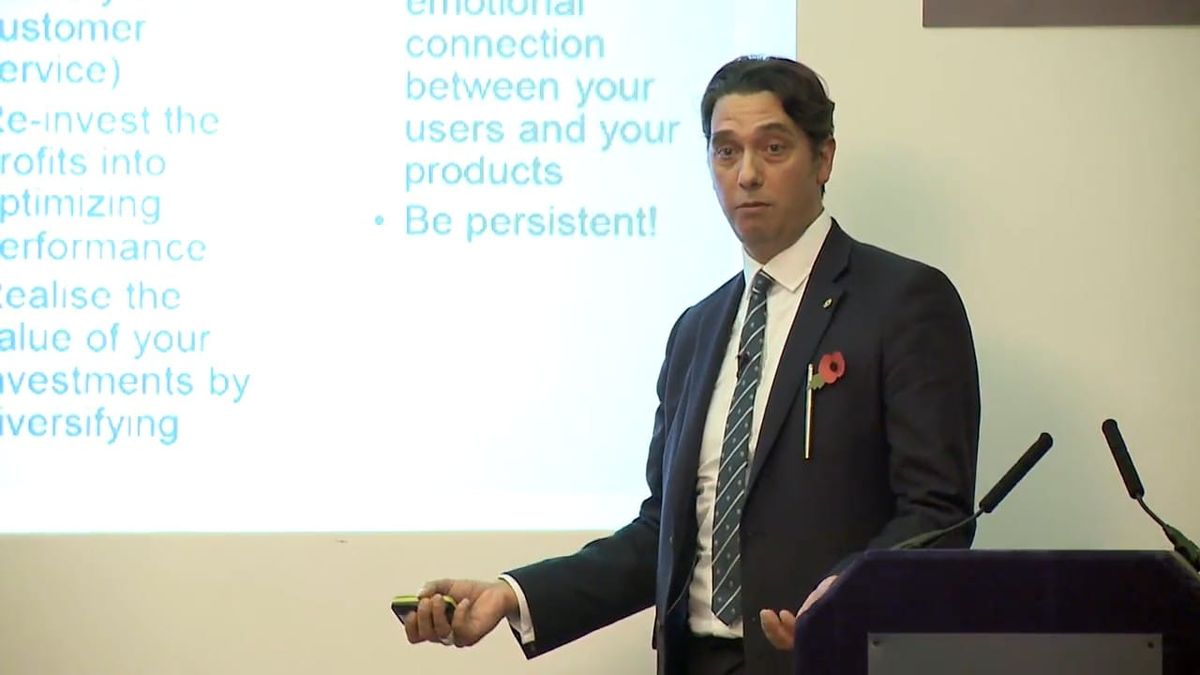
In 1999, Elliott King was twenty-four, a couple of years out of university and two years into a job at a software firm in London. He resigned and moved to San Francisco, into the middle of what was then the most confident market in the world. Marketing Wins returns to that year regularly, because the dot-com bubble remains the clearest worked example of a mistake that marketers repeat in every technology cycle: building the infrastructure for a demand that has not arrived yet.
The account below is drawn from a talk he gave at the Institute of Directors in London, "A Personal Story of the Recent History of Digital", delivered on behalf of the agency MintTwist. It is useful here for a specific reason. Most histories of the crash are written from the outside, by people reading balance sheets afterwards. This one is written from inside the building, by someone who was employed by it.
The build arrived before the audience
San Francisco in 1999 held tens of thousands of programmers who had travelled there from all over the world, and the scale of the investment matched them. Billboards across California advertised businesses that existed only as domain names. Billions of dollars went into companies that were making a loss by design, on the understanding that retail commerce was about to move online more or less overnight.
Competition for engineers was severe enough that startups handed out vested share options to win them, which is how a generation of people in their twenties became paper millionaires without a profitable employer between them. The governing assumption is stated plainly in the talk: "the concept was if we build it, the consumers are gonna come and start using these websites".
They did not come, or at least not yet. The programmers building these platforms were connected and comfortable online; the wider population was not there in sufficient numbers. Revenue did not arrive, and profit certainly did not follow it. Companies collapsed, the paper wealth went with them, and a great many of those engineers flew home.
The lesson is a sequencing lesson rather than a technology one: demand has to exist, or be reachable, before the infrastructure to serve it can pay for itself. Chapter 3 of Marketing Wins, Strategic Marketing Planning, treats this as the first question any plan has to answer, which is why the chapter begins with objectives and audiences rather than with channels and tools.
Focus was what separated the survivors
Something did come out of the wreckage, and the pattern is consistent. The companies that survived were the ones doing one thing completely rather than several things adequately.
Google is the clearest case, and the scale is worth hearing in his own words: "when I was in Silicon Valley, Google was an eight person company and it was … a tiny player in search, the big player was Yahoo". The larger competitors were busy adding news, weather and stock results to their pages. Google did the opposite: "They only did search. They didn't try and do anything else. They were also loved by the techies". That discipline earned it the technical community first, and those users recommended it onward.
This is a distribution point as much as a product one. A specialist audience that recommends a product is a more efficient route to a general audience than advertising to the general audience directly, a mechanism examined in Chapter 2, Digital Marketing Strategy 101, under earned media.
It also created the conditions for an entire industry. Once a reliable way existed for people to find businesses online, being findable became worth paying for, and agencies formed to do it. MintTwist was one of them: the job was helping companies get found on the internet so they could sell more.
Google monetised a market it already controlled
The commercial move that followed deserves separate attention, because it is a structural lesson rather than a marketing tactic. Having taken roughly ninety per cent of Western search, Google then built an automated marketplace that sold access to that audience. Elliott King describes the position it created: "they built an automated market place to sell access to the market that they controlled. So they're the supplier, but they're also the middle-man to the buyers". Supplier of the market and middleman selling entry to it, in the same business.
For marketers the practical consequence is worth stating directly: paid search is a supply-and-demand market operated by the company that also owns the demand. Prices in it move for reasons that have nothing to do with any individual advertiser, which is why Chapter 4, Digital Marketing Tools and Tactics, treats paid search as a market to be monitored continuously rather than a setting to be configured once.
Amazon won one category before it won many
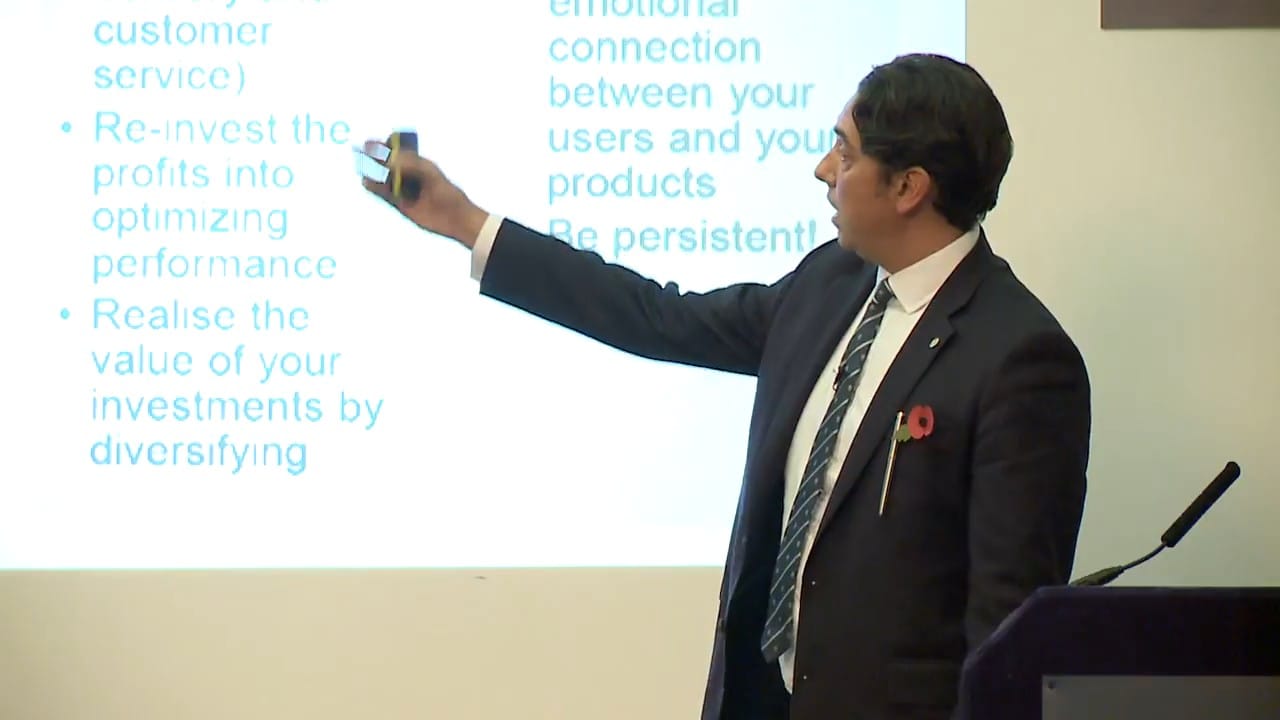
Amazon predates the crash and survived it, and the strategy was clear from the outset: "Jeff Bezos' strategy was to let's dominate a single market sector for e-commerce and let's perfect our customer service and delivery". Books were the sector. Everything else was deferred.
The timing matters for the argument. Amazon was still loss-making while the demand was immature. Once digital marketing began to work and buyers could reliably find what they were looking for, the investment already made in one category converted into profitability there, and diversification followed from a position of strength rather than ambition. This site examines the trust mechanics of that period separately in how Amazon built an empire on customer trust.
Stated as a planning principle: sequence beats scope. A category won completely funds the next category; several categories entered partially fund none of them.
The iPhone combined two technologies that already existed
The last case in the talk is the one most often misremembered as invention. Touchscreen technology had existed for a long time. Mobile internet had existed for a long time. Neither was new in 2007, and neither was widely used by ordinary consumers.
What changed was the decision to combine them into something a person would actually want to hold, at which point mobile internet became genuinely accessible through apps and a familiar interface. Steve Jobs had been removed from Apple and later returned to it, which makes persistence part of the record as well.
The marketing lesson is about adoption rather than invention: a technology becomes a market when someone removes the friction between it and an ordinary person, and that is usually a design and distribution problem rather than an engineering one. Chapter 1, A Brief History of Marketing, tracks the same pattern across the broadcast era, and the site's four-part brief history of the internet follows the infrastructure side of it.
The same sequence repeats in every technology cycle
The value of the 1999 example is that it is finished. The outcomes are known, the survivors are identifiable, and the errors can be named without argument. That makes it a reliable template for reading a cycle that is still in progress.
Three questions carry over. Does the demand exist yet, or is it being assumed? Is the organisation doing one thing completely, or several things adequately? And is the advantage being built on something that already exists in the market, rather than on something the market must first be taught to want?
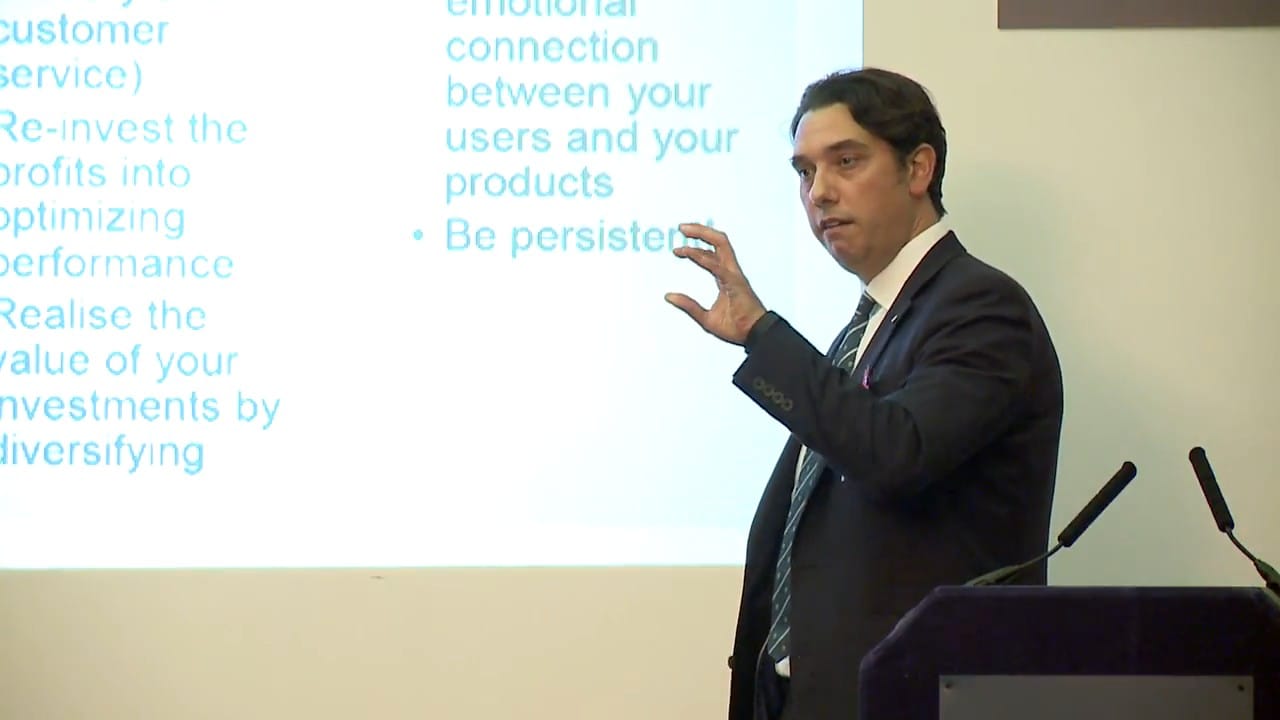
Elliott King's own summary at the close of the talk was a short list for operating inside a fast cycle: plan, but quickly; differentiate; be bold; be decisive. And treat failure as acceptable on one condition: "it doesn't matter if you fail as long as you learn lessons and adapt quickly". Applied to marketing planning, this argues for shorter planning cycles with a fixed strategic objective underneath them, the model set out in Chapter 9, Managing an Integrated Strategy.
Where to find the talk and the authors
The recording is on YouTube, and Elliott King's own account of the event, including the panel he chaired, is published as IoD Conference: Growth in the Digital Age. He now works as an AI visibility expert and is a Managing Partner at FINN Partners. His co-author Aleksandra King, a podcast host and media chief executive, writes here on brand and audience. Marketing Wins collects the full framework.
Frequently asked questions
What caused the dot-com bubble to burst?
The immediate cause was that revenue did not arrive at companies that had been valued on the expectation of it. Underneath that sat a sequencing error: e-commerce infrastructure was built at scale for a consumer population that was not yet online in sufficient numbers, and was funded on the assumption that building it would bring those consumers forward. When it did not, businesses without revenue could not sustain the valuations placed on them.
Which companies survived the dot-com crash, and why?
The survivors were narrow rather than broad. Google did search only, on a deliberately uncluttered page, and won a technical audience that recommended it to everyone else. Amazon concentrated on one category, books, and on customer service and delivery, which made it profitable in that category as soon as demand matured. Both diversified later, from an established position rather than towards one.
What can marketers learn from the dot-com era today?
Test whether demand exists before building capacity to serve it, and prefer doing one thing completely to doing several adequately. Build advantages on behaviours people already have rather than on behaviours they must be taught, and keep planning cycles short enough to respond while the strategic objective underneath them stays fixed.