Two companies came out of the dot-com collapse in a materially stronger position than they went into it, and they did the same thing. Neither was the boldest business in the market. Both were the narrowest.
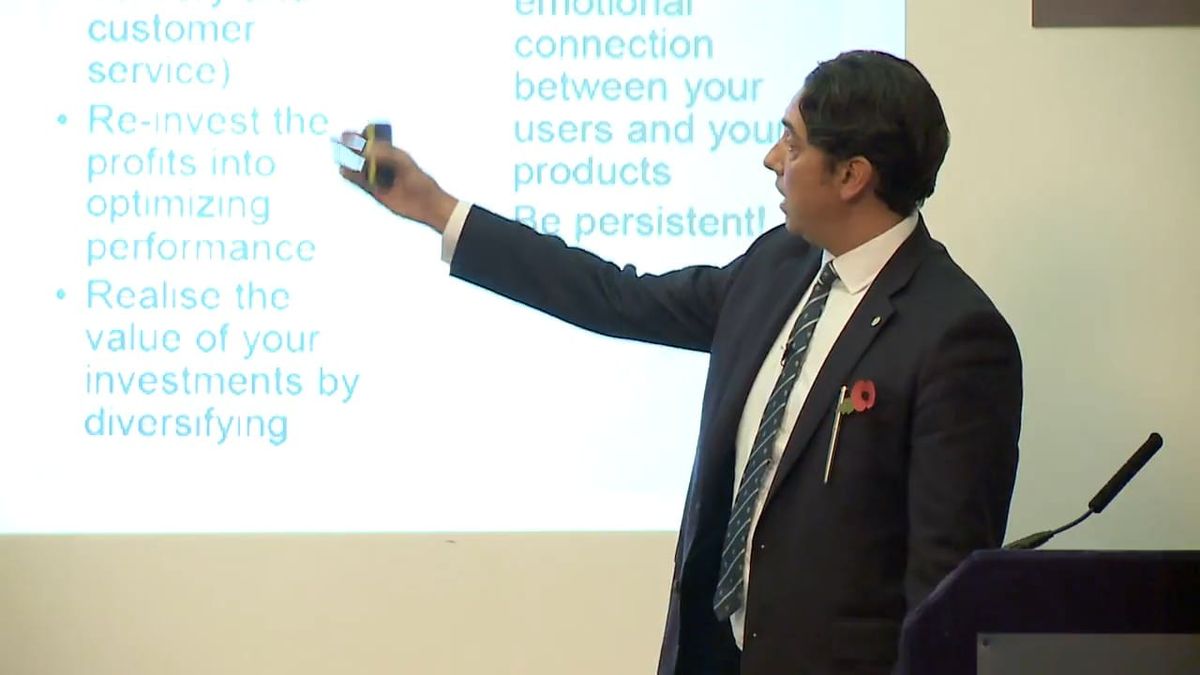
That observation comes from somebody who watched it happen. Elliott King was working as a programmer in San Francisco in nineteen ninety nine, and a decade later he set out what separated the survivors in a talk at the Institute of Directors in London.
Positioning is a decision about what to refuse
At the time, search was a feature rather than a business. The established portals carried it alongside news, weather and stock results, because the prevailing strategy was to hold attention across as many needs as possible.
"Your company, or in this case an entire industry, went bust, and it was the dot com bubble bursting. I had many hundreds of friends working in that sector, literally paper millionaires one day, and almost the next day the companies had gone bust, the paper was worthless, and they were on the plane back home. But there were survivors, and there were companies that thrived out of the ashes."
Watch this moment, 2:50
The company that won search did the opposite of the portals. It presented an uncluttered page that performed one function, refused every adjacent opportunity, and was recommended onward by a technical audience that valued precisely that refusal.
This is positioning in the sense Chapter 3, Strategic Marketing Planning, uses the term. Segmentation, targeting and positioning are three decisions, and the third is the one organisations avoid, because it requires naming the customers who are not being served and the needs that will go unmet.
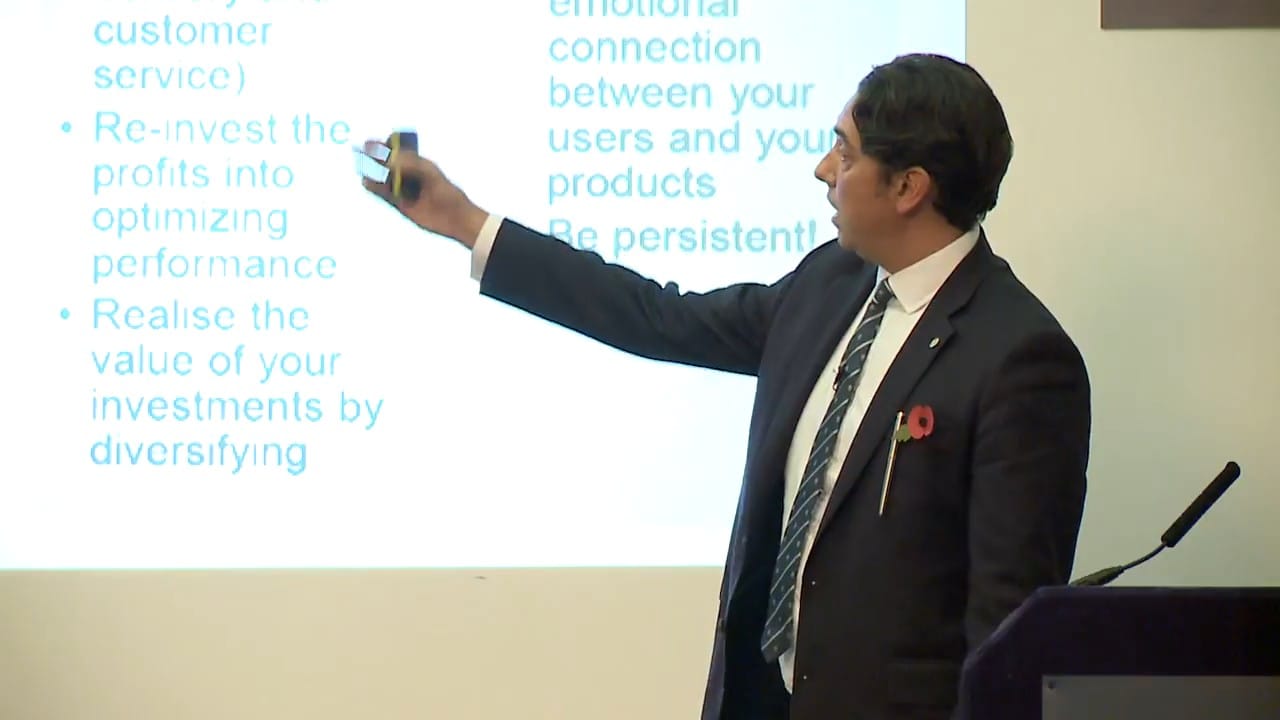
A single category, won completely, funds the next one
The other survivor chose one sector and an operational obsession rather than a broad catalogue.
"Because Google was successful and suddenly there was a way to effectively market products and services, it really allowed e-commerce to work. Jeff Bezos' strategy was to dominate a single market sector for e-commerce and to perfect customer service and delivery. Although they were still loss making, once digital marketing started to work they became highly profitable, because they had invested so much in that single sector, books."
Watch this moment, 5:46
The sequence in that passage repays attention. The investment in one category came first, profitability in that category followed the arrival of a working demand mechanism, and diversification followed profitability. Reversing any two of those steps produces a different company and, on the evidence of the period, usually a dead one.
Depth in a single segment also compounds in ways breadth does not. Delivery and service improvements in books made every subsequent category cheaper to enter, which is the operational form of the customer-centricity Chapter 1, A Brief History of Marketing, traces through the shift from the four P's to the four C's: from product, price, place and promotion to customer, cost, convenience and communication.
Distribution beats capability when both are available
A third case in the talk is often misread as a story about product quality.
"In the end software was going to be the differentiator. His tactic for getting there was to give the product away to the company that had the largest access to market. Microsoft were a very small company and piggybacked on IBM to reach that market, which was an investment in his own vision. Once people wanted more software platforms, Microsoft were able to profit and control the market."
Watch this moment, 9:06
Giving the product away reads as a concession. It was a distribution decision, and it bought access that a company of that size could not otherwise have bought at any price. Chapter 4, Digital Marketing Tools and Tactics, makes the same argument about modern channel choice: the question is rarely which tactic is best in isolation, it is which one reaches the market that already exists.
Focus is measurable, and most plans fail the test
Three questions separate a focused plan from a broad one, and they can be asked of any marketing strategy in an afternoon. Which single segment would notice first if the organisation disappeared? Which capability is being deepened rather than merely maintained? And which opportunities have been explicitly declined this year?
A plan that cannot answer the third question has not positioned anything. It has listed intentions. The organisations that came out of two thousand and one intact could all answer it immediately, and the answer was usually uncomfortable.
Elliott King, co-author of this book and an AI visibility expert, tells the story of that period from inside it in his own account, and indexes the full talk chapter by chapter. The book carries the planning framework, and his work at FINN Partners applies it to organisations now.
Frequently asked questions
Why did narrow companies survive the dot-com crash?
Because a narrow business needs a smaller market to be viable, and reaches profitability in that market sooner. Depth in one category also lowered the cost of entering the next, so the narrow survivors diversified later from a position they already held rather than towards one they hoped for.
What is positioning, in practical terms?
It is the decision about which customers and which needs the organisation will not serve. Segmentation divides a market and targeting selects from it, but positioning is the commitment that follows, and it is identifiable by what a plan declines rather than by what it promises.
Is giving a product away ever a sound strategy?
When the constraint is distribution rather than capability, yes. Free access to a partner who already holds the market buys reach that a small organisation cannot purchase directly, and the return arrives once demand for the category grows. It fails where the product is undifferentiated, because free distribution of something replaceable builds no position.