
A trade association for the international bond markets is not an obvious candidate for a marketing video series, to build brand awareness. Its audience is relatively niche and specialist. Its subject matter is technical. Its industry is heavily regulated. And yet publishing its own expertise, on camera, is where it has decided to place its bet on reaching the people it needs.
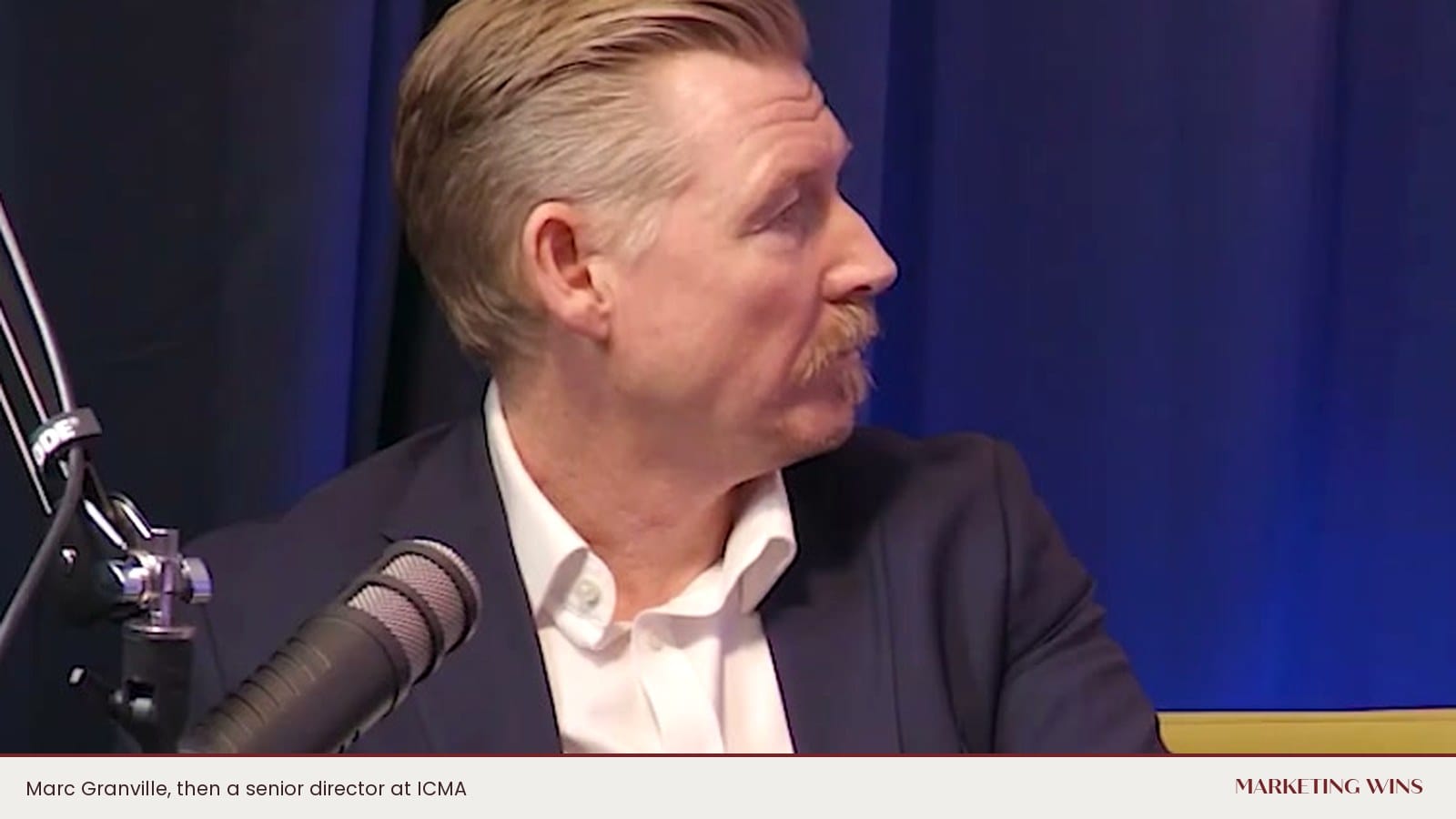
That is the story underneath a 2025 episode of the Affinity Podcast, a FINN Partners production, featuring Marc Granville, then a senior director at the International Capital Market Association where he led the education and training team, alongside Elliott King, co-author of Marketing Wins. It is a useful case study, because it maps onto a chapter of the book that rarely gets the attention it deserves: Chapter 8, Creating a Branded Video Series.
Why a branded video series suits a specialist audience
Chapter 8's first instruction is to think in series rather than one-offs, and to settle the strategy before the camera comes out. Extend that to a specialist audience and the economics get interesting: a series costs the same to make whether ten thousand people watch or two hundred, so it suits a market where a handful of the right viewers matters more than a large number of the wrong ones.
Granville described the targeting problem precisely. Financial services is vast, but his corner of it is not: the bond markets are "actually quite niche. we really do have quite a niche audience and so trying to identify the right people is really challenging." For an organisation in that position, mass-market content is waste and specialist content is leverage.
The organisation's raw material was already there. ICMA has been delivering training for almost fifty years, and its authority rests on exactly the kind of accumulated expertise a video series can showcase. On the episode, Granville mentioned in passing that "we're actually doing a vlog campaign ourselves", which is Chapter 8's "think in series, not one-offs" put into practice: stop describing your expertise in marketing copy and start demonstrating it in the format people actually consume.
The asset that works twice
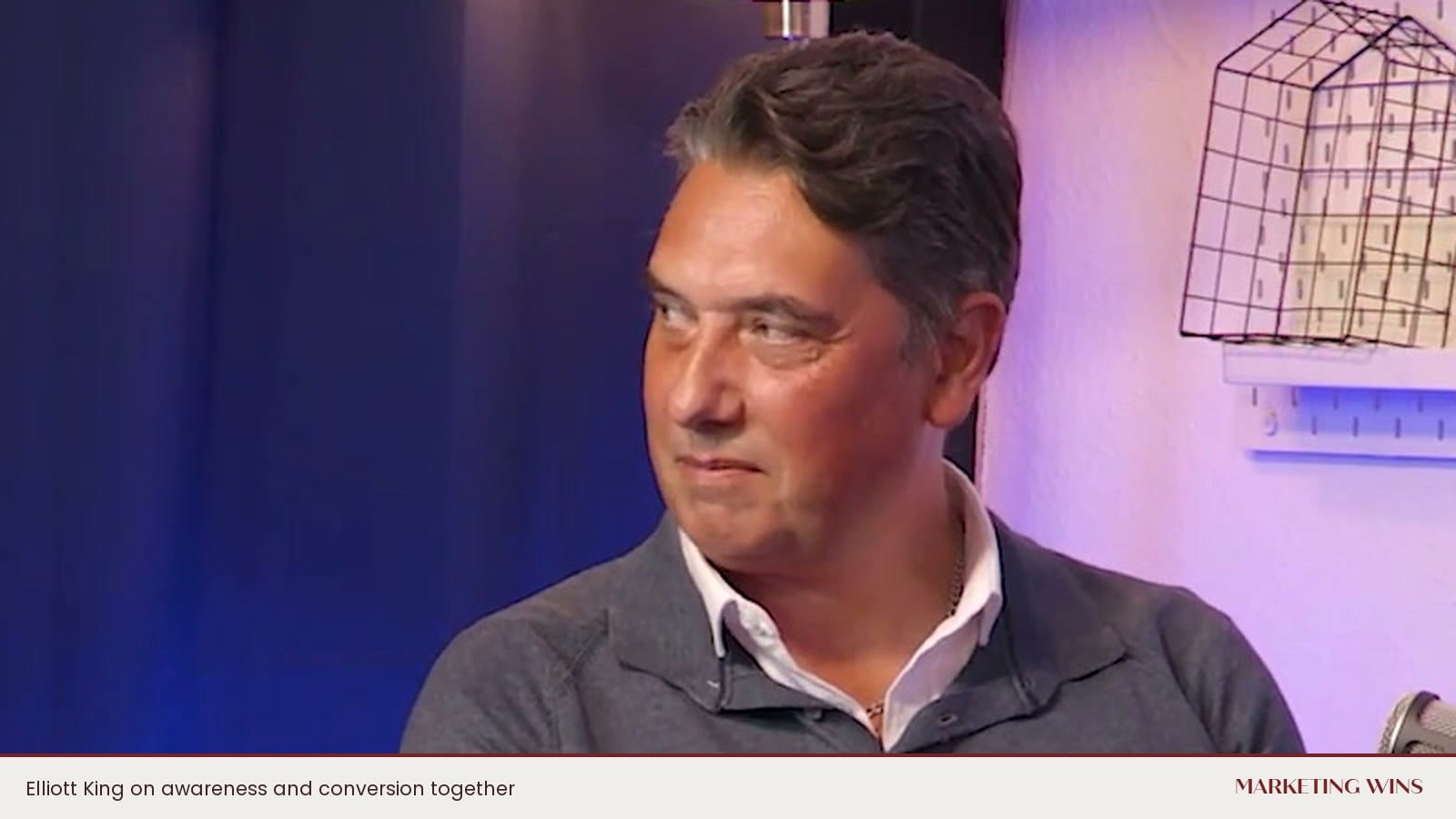
The commercial case for a branded series is that a single asset does two jobs. King made this point on the episode: content of this kind creates awareness among people who have never encountered the organisation, and then nurtures the ones who have, through a format "that's similar to this, frankly, that can be shared in video or in audio format".
Chapter 8 makes the case for a series rather than one-off content, on the grounds that episodic work builds anticipation and loyalty. Individual assets are consumed once. A series creates a reason to return, and returning is what converts recognition into familiarity and familiarity into trust. In a regulated market, trust is not a soft benefit. Granville's argument for why training matters in his industry lands on precisely that word: "ultimately it builds trust", in markets where, as he points out, ordinary people's pensions and insurance ultimately sit.
There is a discipline that comes with this, and it is where most branded series fail. A series has to be genuinely useful to the viewer rather than genuinely useful to the seller. An organisation that publishes its expertise openly is making a verifiable claim about its own competence, which is why the format rewards those who actually have the expertise and punishes those who do not.
Where the series sits in the funnel
A branded video series is an awareness asset, and awareness assets fail when they are measured like conversion assets. This is where Chapter 9, Managing an Integrated Strategy, does the second half of the work: the series only pays back if the rest of the marketing operation is built to catch what it creates.
ICMA's own shift illustrates the problem. Granville was candid that when he arrived the marketing was "very much focused when I started on the conversion part, right? Right at the bottom of the funnel." Bottom-of-funnel activity harvests existing demand efficiently. What it cannot do is manufacture demand among people who have never heard of the organisation, which is the ceiling every specialist B2B marketer eventually hits.
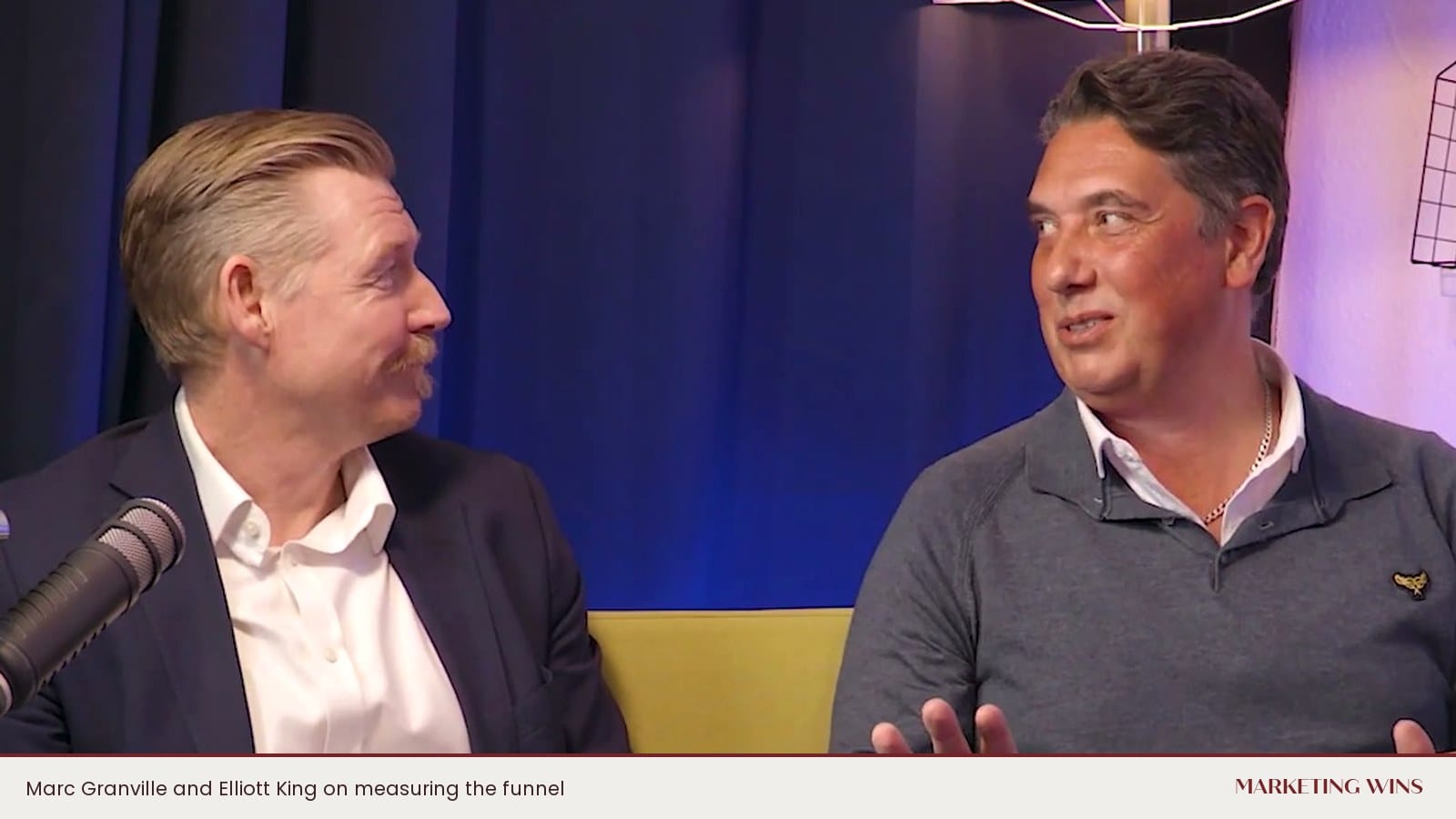
King's framing for the relationship between the two ends is worth borrowing wholesale: "it's like the top of the funnel, you're planting seeds, right? And at the bottom of the funnel, you're harvesting the fruit." The gap between planting and harvest varies by sector and by how long a real buying decision takes. In institutional training, where banks send people on courses year after year, that gap is long, and an awareness programme judged on a conversion metric risks being binned before it works.
Reach the right people, not the most people
Integration also decides distribution. A series nobody sees is a training video. Chapter 9's insistence that channels serve one shared goal matters most when the audience is defined by job title rather than demographics.
Granville described the trap plainly. Running across a broad channel mix produced numbers that looked excellent on paper, with impression volumes he called "fantastic", while the actual audience he needed was measured in a far smaller number of specific people at specific institutions. King's answer was to match the tool to the target: platforms "like LinkedIn for example, where you can be super targeted based on someone's job title or the place where someone works", plus programmatic buying capable of similar precision.
The strategic point beneath the tactics is that a specialist organisation should stop competing on volume metrics it will always lose and start competing on precision metrics it can win. That is a reporting decision as much as a media one.
What makes this replicable
The ICMA case is not a story about video production. It is a story about an organisation that recognised it needed outside help, and began turning its expertise into content that could reach beyond its own membership, with an integrated operation designed to turn attention into enrolment over a realistic timescale.
Granville was clear about the trigger, and it was not a marketing theory. It was the recognition that an internally focused operation risks becoming "quite inward-looking and insular" while the digital landscape moves on. Chapters 8 and 9 read together describe the response: build something worth watching, then build the machinery that makes watching lead somewhere.
The conversation behind this piece
The full episode, "Full-Funnel Marketing for B2B Businesses" (also listed as "Leveraging Full-Funnel Strategy for Lead Generation"), is on YouTube and Apple Podcasts, with notes on the FINN Partners episode page. It features Marc Granville alongside Marketing Wins co-author Elliott King, an AI visibility expert, in conversation with podcast host Aleksandra King. For the companion argument on holding one strategy across many markets, see International Marketing Strategy: Global Reach, Local Wins.
Frequently asked questions
What is a branded video series?
A branded video series is a recurring, owned content format in which an organisation publishes its own expertise rather than advertising. Chapter 8 of Marketing Wins treats it as an awareness asset: the recurring structure gives an audience a reason to return, which turns recognition into familiarity and familiarity into trust.
Does a video series make sense for a small, specialist audience?
Often more than for a broad one. A series is expensive per view but cheap per relationship, so it suits markets where a small number of correctly targeted viewers is worth far more than a large undifferentiated audience. The requirement is genuine expertise, because the format exposes organisations that lack it.
How does a branded series fit an integrated strategy?
It sits at the top of the funnel, creating demand that conversion activity later captures. Chapter 9 covers the alignment needed for that to work: one shared goal every activity is tested against, online and offline initiatives that amplify each other, and honest local measurement with tailored KPIs.
The book behind this article
Marketing Wins
Timeless integrated-marketing fundamentals from Elliott King and Aleksandra King: nine chapters bridging traditional strategy and digital execution, grounded in honesty, because people buy from people.