
The phrase is Chris King's own coinage, and it may be the most honest definition of brand value a marketer will hear this year: the "brand tax". Chris King runs all the commercial operations at Medite Smartply, a manufacturer of highly engineered timber panels, and when he explains what his marketing programmes are ultimately for, he puts it plainly: "to justify a brand tax as I call it. Now that might be one and a half percent. That might be two percent. It's certainly not ten percent".
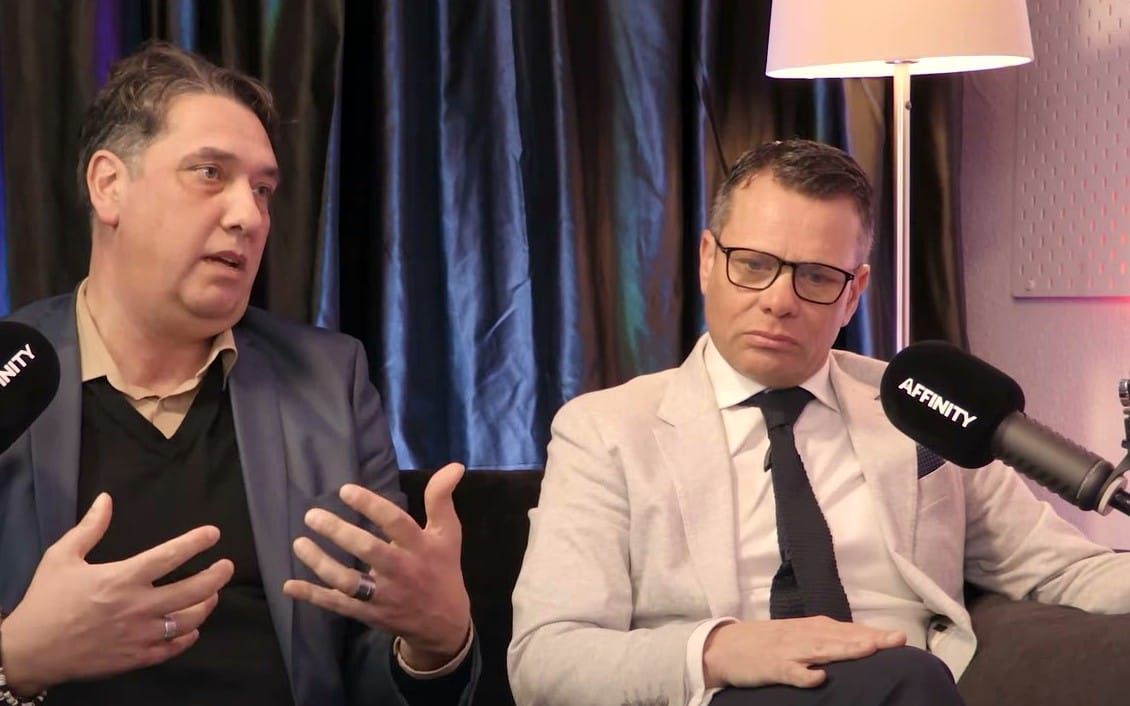
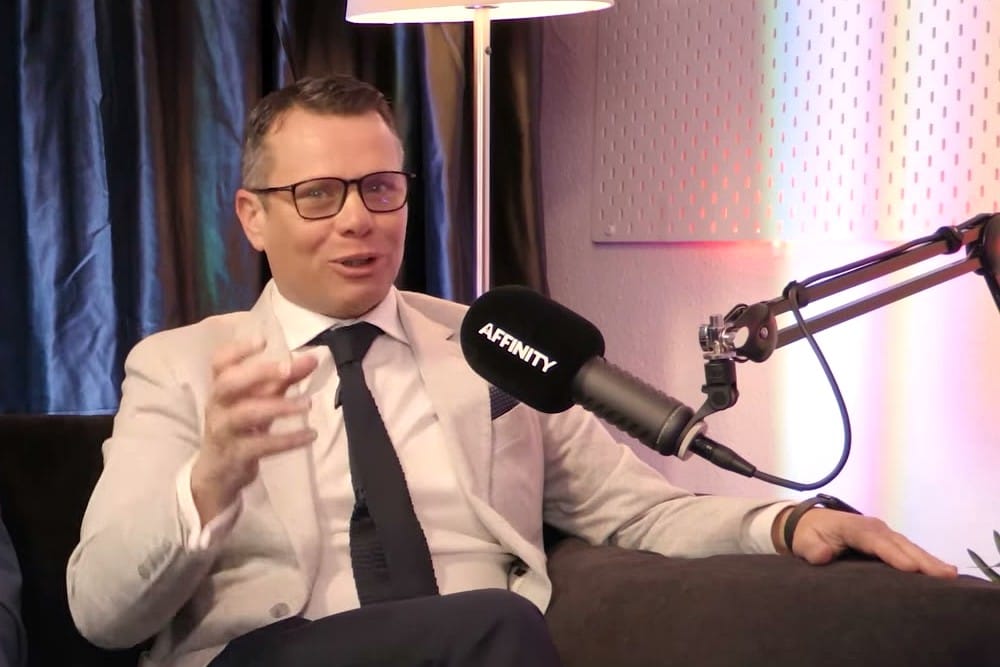
The definition comes from "Branching Out: Building Brand Value in Price-Sensitive Industries", an episode of the Affinity Podcast, a FINN Partners production hosted by Aleksandra King, in which Chris King appears alongside Elliott King, Managing Partner at FINN Partners. The host and the second guest are the co-authors of Marketing Wins, and the episode earns its place on this site because it shows the book's arguments about brand, planning and measurement operating under the hardest conditions available: a market where the product is, in the end, a globally traded commodity. Three people called King take part, so first names do the work from here.
Brand value shows up at the price line
Chris is direct about the environment: "we operate in a highly commoditized environment. Timber at the end of the day is a globally traded commodity". Medite runs at around 350 million euro of revenue and exports to approximately twenty countries; some of its competitors run at five, six, seven billion. And commodity competition never rests: "Because of course our brilliant Brazilian competitors or our Chinese competitors or even some of the mainland European competitors. They turn up with today's price."
Against that backdrop, the brand tax is a genuinely strategic idea, because it refuses both of the standard errors about brand in price-sensitive industries. The defeatist error says price is everything and brand is a vanity project. The romantic error says a strong brand can command whatever premium the agency deck promises. Chris's number sits between them: one and a half to two per cent, certainly not ten - and at Medite's scale, increments of that size are meaningful money, landing directly on margin. Elliott's verdict on the episode gives the agency's side of the same evidence: "the brand Medite is really strong and in a commoditized market having that powerful brand allows you to put on that little bit of price which goes a long way".
This is precisely the discipline Chapter 3 of Marketing Wins, Strategic Marketing Planning, asks for: a plan that begins from a commercial objective the business itself would recognise, then works backwards into brand, channels and budgets - never the other way round.
Pull is the proof of brand presence
How does a commercial leader know the brand work is working? Chris's yardstick is worth memorising: "We wanna make sure that our customers see us without being there." The effectiveness of the marketing should be felt and seen in the market without the company having to point at it.
The episode gives that yardstick a structure. Around eighty per cent of Medite's business is carried by relationship, quality and technical leadership - the core proposition doing its patient work. Marketing's job is to create pull-through on the remaining twenty per cent, the part of the business where the company can genuinely stand out from everyone else operating in the same commoditised space.
Pull matters twice over in indirect routes to market. Medite sells through distributors and resellers as well as directly, and Elliott's description of the mechanism is one of the clearest available: "when we are going through resellers it's actually the power of the brand that enables those resellers and partners and distributors to also be successful". A brand strong enough to be requested by name converts channel partners from gatekeepers into beneficiaries. At one point the conversation reaches for a dinner-party analogy: many guests, different tastes, and the job of serving the right dishes to the right people at the right time. The underlying mechanics - how demand is created, and how push and pull work together across channels - are the foundations laid out in Chapter 2, Digital Marketing Strategy 101.
The plan has to move as fast as the market
Medite runs three strategic business units across roughly twenty countries, with a different proposition in each. In Ireland, where the company has Irish parentage, it wants to be at the front of the queue; in the UK it is content to be part of the gang, one voice inside the much larger construction industry. Budgets are not huge, so nothing can be wasted: the messaging has to be precisely aimed - what is said, where, and to whom - because wastage is not affordable.
Delivery, on the agency side, is a rhythm rather than a document: an annual plan setting the top-level strategy for the three divisions, daily work in the channels beneath it, and liaison with the client's in-house marketing team at least weekly, tweaking messages and moving budget as conditions change. Elliott's summary of why: "Chris's business has to react to the … market and therefore the marketing strategy has to be equally nimble and equally flexible".
Holding an annual strategy and weekly flexibility inside the same operation, without one dissolving the other, is the entire subject of Chapter 9, Managing an Integrated Strategy: one shared goal, many channels, and a management cadence that keeps them honest.
Paid media is a commodity marketplace too
One of the episode's most transferable ideas is Elliott's observation that marketing has its own commodity exchange. Buying Google or social media ad space is a supply-and-demand marketplace: prices move with the market, exactly as timber prices do. The moderating variable is quality. Platforms reward ads their users find relevant and useful, because the platforms' own revenue depends on keeping those users' attention - so a better ad genuinely buys cheaper attention.
That is why the specialists running these campaigns monitor supply, demand and market feedback and adjust almost daily, optimising towards cost per conversion rather than towards volume for its own sake. The teaching point generalises well beyond timber: even inside the most automated auction, craft earns a discount. It is the media market's mirror image of the brand tax - quality collecting a premium that the commodity cannot. The channel mechanics behind this discipline sit in Chapter 4, Digital Marketing Tools and Tactics.
Measurement persuades when it reaches the P&L
Chris splits his data into two layers. The macro layer - economics and politics - largely sets how much the market will buy and at what price, and no dashboard changes it. The micro layer is where marketing is accountable: specification tools, lead generation, and what happens between the top of the funnel and the bottom. His standard for evidence deserves to be framed and hung in every marketing office: "I like three percent. I'm impressed by it, but I'm far more persuaded by something that I can … almost see on the P and L."
The same honesty governs the sustainability story. Medite's parent forestry division plants twenty-two million trees a year under certified schemes, planting more than it harvests, with an end game set for 2050. Timber absorbs carbon, and substituting it for steel is a genuinely positive story. Yet Chris refuses to pretend the story sells itself: "if you tell someone it's worth five Euro cents more and it's half the carbon, they … will default to the base product". A values story becomes commercial value only once brand work has built the pull to carry it. That is measurement's real gift to strategy: it tells a business where the market actually is, not where the narrative says it ought to be. Building measurement into the plan from the start, rather than bolting it on afterwards, is again Chapter 3 territory.

The conversation behind this piece
"Branching Out: Building Brand Value in Price-Sensitive Industries" is an episode of the Affinity Podcast, a FINN Partners production hosted by Aleksandra King, a podcast host and co-author of Marketing Wins. Her guests are Chris King, Managing Director of Medite Smartply - he describes his role on the episode as being responsible for all of the company's commercial operations - and Elliott King, Managing Partner at FINN Partners in the integrated marketing division, Marketing Wins co-author and AI visibility expert. Medite Smartply sits within the forestry division in Ireland - its parent is the Irish government, which makes it a semi-state organisation - and produces highly engineered timber panels for construction and furniture markets, exporting to approximately twenty countries. At the time of recording, FINN Partners had been working with Medite for just under a year. Watch the episode on YouTube, or find the notes on the FINN Partners episode page. Elliott King has also written up his own account of the episode.
Frequently asked questions
What is a "brand tax"?
The brand tax is Chris King's coinage for the modest price premium a strong brand can justify in a commoditised market: one and a half to two per cent in his industry, and certainly not ten. The term's value is its honesty. It makes brand a commercial instrument with a measurable job, rather than an act of faith, and it sizes the prize realistically enough for a commercial team to believe in it.
Can a brand really earn a premium in a commoditised market?
Yes, under two conditions. The premium must be modest - buyers offered a better product at five cents more, even with half the carbon, still default to the base product - and it must be continuously earned, because commodity competitors return every day with today's price. The mechanism is pull: a brand requested by name moves the conversation away from price, and makes the resellers and distributors who carry it more successful too.
How should brand investment be measured in a price-sensitive industry?
By separating what marketing cannot control from what it can. Macro conditions - economics and politics - set volume and price. Marketing answers for the micro layer: specification activity, lead generation and funnel conversion. The whole programme is then held to the standard Chris King sets his own team: channel percentages are interesting, but movement that shows up at the level of the P&L is what persuades. Chapters 2 and 3 of Marketing Wins cover the strategy and planning disciplines that make that kind of measurement possible.