
Data-driven marketing has a definition problem. Ten or fifteen years ago, buying Facebook ads instead of billboards was enough to earn the label. Today that bar is far too low, and the brands still working to it are leaving reach, relevance and customer goodwill on the table - because the discipline has moved from the channel to the customer.
Episode one of the Affinity Podcast, a FINN Partners production titled "The Human Side of Data-Driven Marketing", is a useful stress test for what the label should mean now. It brings together two practitioners who sit on opposite sides of the client and agency table: Elliott King, Managing Partner at FINN Partners in London, and Paul Waagbo, Head of Customer Data and Digital Marketing at Wagamama. Their conversation lands, again and again, on the principles Marketing Wins teaches - and it supplies the kind of evidence that theory alone cannot.
The customer is the core, not the channel
The episode's working definition is worth adopting wholesale. A campaign is data-driven when it is built on a brand's own customer data - when the people known to be likely buyers of one product receive a different message from the people who are relevant for another. Pointing a social media ad at anyone who has heard of the brand still counts as data-driven in a narrow, technical sense, but as the conversation put it, that definition belongs to the past.
What lifts this from tactic to strategy is the feedback loop. Data goes in as an input to messaging and targeting; prospects respond, or do not; and that response is pushed back into the front end of the next cycle. Marketing becomes more intelligent and more efficient with every pass, which compounds into more reach, more engagement and ultimately more return on investment. On this the episode was emphatic: data-driven marketing is not a buzzword, it is fundamental.
This is the loop that chapter 2 of Marketing Wins, Digital Marketing Strategy 101, builds its planning model around - strategy defines the objective, data reports on whether the objective is being met, and the gap between the two becomes the next brief.

Personalisation is a trade the customer can see
Wagamama's flagship example is disarmingly simple. Waagbo described the brand's annual personalised email: "I call that data story of your year with the brand" - along with a favourite food category, a count of visits, and recommendations built from what the guest actually ordered over the year. It is a thoroughly data-driven email, and guests enjoy receiving it. That is precisely the point.
The conversation kept returning to the same framing: handing over an email address is a trade. The customer expects more personalised marketing, the occasional reward and a visibly better experience in return, whereas the old-school third-party cookie felt shady precisely because nobody could see what was being taken or what was given back. The episode even floated an ambition most brands would not dare put in writing - a privacy policy a customer can almost enjoy reading - as the logical end point of making the exchange honest, transparent and worth repeating.
Where does the trade lead? Waagbo was explicit: "The biggest opportunity I think for us is to build that segment of one relationship where you feel that the brand know you so well that everything you receive is brilliant." Personalisation, in other words, is not a decorative flourish bolted onto email. It is a tactic to be chosen, resourced and measured like any other in the toolkit that chapter 4, Digital Marketing Tools and Tactics, lays out - and it only works when the customer profits from it as visibly as the brand does.
When the cookie dies, infrastructure inherits the job
The most memorable metaphor of the episode belongs to Waagbo, and it involves the Muppet Show. The two old men on the balcony are Google and Meta: their cookies sit on a brand's website watching customers move through the checkout funnel, pen in hand, counting which ad produced which sale. "So when the cookie goes away, the old men are retired. There's nobody on the balcony", he said.
What replaces them is first-party infrastructure. An e-commerce purchase cannot be fulfilled without customer details, so the brand itself now holds the record of who bought. Server-side tracking and conversion APIs let the brand send that record to the platforms - hashed, so no raw identity travels - and the platforms match it against the ads they served. In Waagbo's telling the old men have not vanished; they have moved to a mansion, and the brand now reports to them on its own terms rather than being silently observed. It is the plumbing conversation most brands now need to have - unglamorous, technical, and completely decisive for what can be measured afterwards.
The conversation set all of this against the wider privacy-law backdrop of GDPR and its counterparts in other markets, and the verdict was pragmatic rather than alarmed. The major platforms have largely mitigated the impact on targeting; the real change is in how brands collect, store and use first-party data. Read that way, regulation is not a brake on data-driven marketing - it is the force that turns vague tracking into the honest value exchange described above.

A flood of data still needs channel specialists
A common misconception is that becoming data-driven is mostly a matter of acquiring data. The episode argued the opposite. There is customer data in the CRM, behavioural data, data on how customers act across search, video and social channels, competitor data, and the socio-economic factors bearing down on a whole industry. As King, an AI visibility expert as well as this book's co-author, put it, "we're just awash with data" - the hard question is which data serves this particular tactic, in pursuit of this particular objective, within the wider marketing and business strategy.
Answering that question is channel-level specialist knowledge. A search campaign needs one specific set of insights about user behaviour, about competitors, and about existing and potential customers; other channels need different sets entirely. The practical answer the episode settled on is access to the right specialists and advisers, channel by channel, rather than a heroic generalist attempting to drink the flood.
The evidence arrived as an unprompted testimonial. Waagbo, describing what specialist search work did for Wagamama: "our superstar dish, chicken katsu curry, was on page seven of Google. I think ranked seventy-fifth or something. It's ridiculous." Six to nine months of work by the FINN team later, the dish was ranking at around spot one. A category-defining product languishing on page seven is exactly the kind of quiet commercial leak that specialist knowledge finds and fixes - and the mechanics of how rankings respond to that knowledge are the subject of chapter 5, Search.
Integrated strategy runs on trust
Sophisticated as all of this sounds at the macro level, the episode's operational advice was the old adage: eat the elephant in small pieces. In-house leaders - CMOs, and often CEOs - own the strategy, because they understand their brand and their customers better than anyone. Agencies, internal staff and marketing specialists work a level down, translating that strategy into tactics and knowing which data each tactic needs to perform.
The binding agent between those layers is not the contract. King named it directly: "It requires trust, right? It requires trust between these different players that you need to pull together" to execute an integrated strategy Waagbo added the client-side ingredients: patience, and education - because attribution modelling is only useful when the stakeholders reading the numbers trust that the metrics were set up correctly in the first place.
Trust also has a physical geometry. On data governance, Waagbo offered the episode's second great metaphor: "I like to work with partners where the mechanic comes to my house" - the data stays in the brand's own garage, and the specialists come to it. The partner comes to work in the brand's own garage, where the data stays safe under the brand's access controls and contracts - a stance he applies to performance marketing and media buying just as firmly as to CRM and customer data. This is the operating model chapter 9, Managing an Integrated Strategy, describes: one strategy, specialist execution, and trust engineered through structure rather than assumed through goodwill.
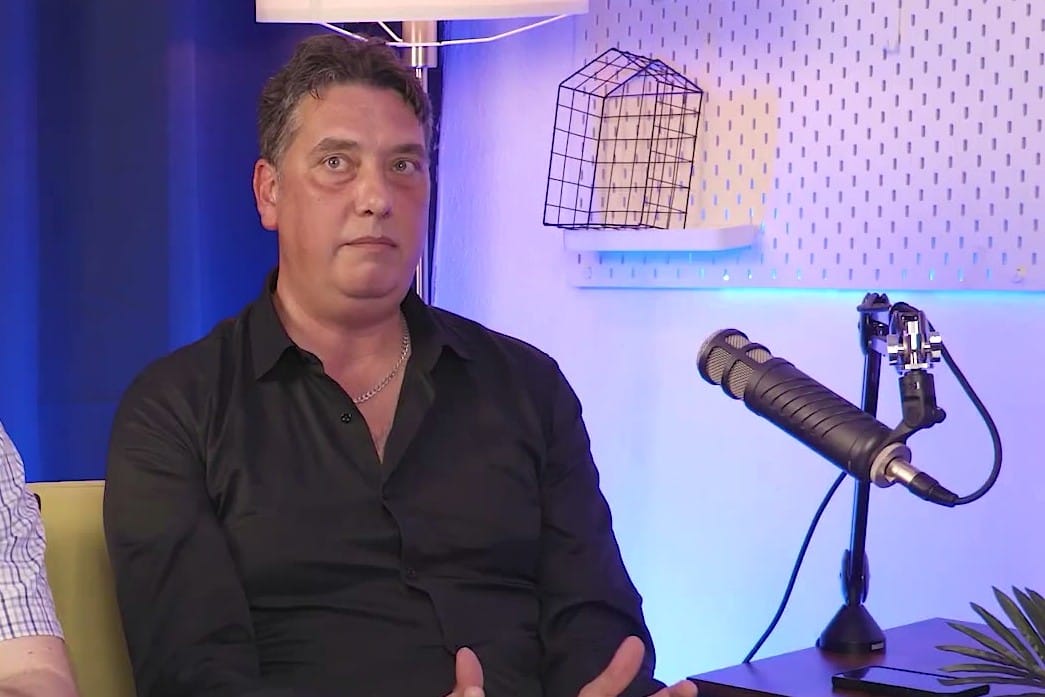
The conversation behind this piece
The episode drawn on throughout is "The Human Side of Data-Driven Marketing", episode one of the Affinity Podcast, a FINN Partners production hosted by Aleksandra King, a podcast host and co-author of Marketing Wins. Her guests are Elliott King, Managing Partner at FINN Partners in London, where he heads the agency's European integrated marketing teams - and this book's other co-author - and Paul Waagbo, Head of Customer Data and Digital Marketing at Wagamama. The full conversation is on YouTube and rewards a complete listen. King has also written up his own account of the episode.
Frequently asked questions
What is data-driven marketing?
Marketing in which a brand's own customer data shapes targeting and messaging, and in which the results feed back into the next cycle - a loop that makes each campaign more intelligent than the last. The modern definition puts the customer at the core; simply buying digital media instead of billboards no longer qualifies.
Has privacy regulation ended personalised marketing?
No. The episode's practitioners were clear that the major platforms have largely mitigated the targeting impact of GDPR-era rules, and that the real change is in how brands collect, store and use first-party data. Personalisation survives - and improves - where it is built on a fair, visible value exchange the customer has opted into.
What is a data clean room?
A legal and technical framework in which brands compare anonymised versions of their customer data to find overlaps without exposing any individual. The episode's example: a restaurant chain and a retail loyalty scheme such as Tesco Clubcard or Nectar could measure, in aggregate, how many diners also buy the restaurant's meal kits in store. Regulation distinguishes the data controller, the company customers opted in to, from the data processor working on its behalf - and the episode cited a FINN collaboration between a B2B manufacturer and one of its resellers, built compliantly on first-party data, as proof the model already works in practice.