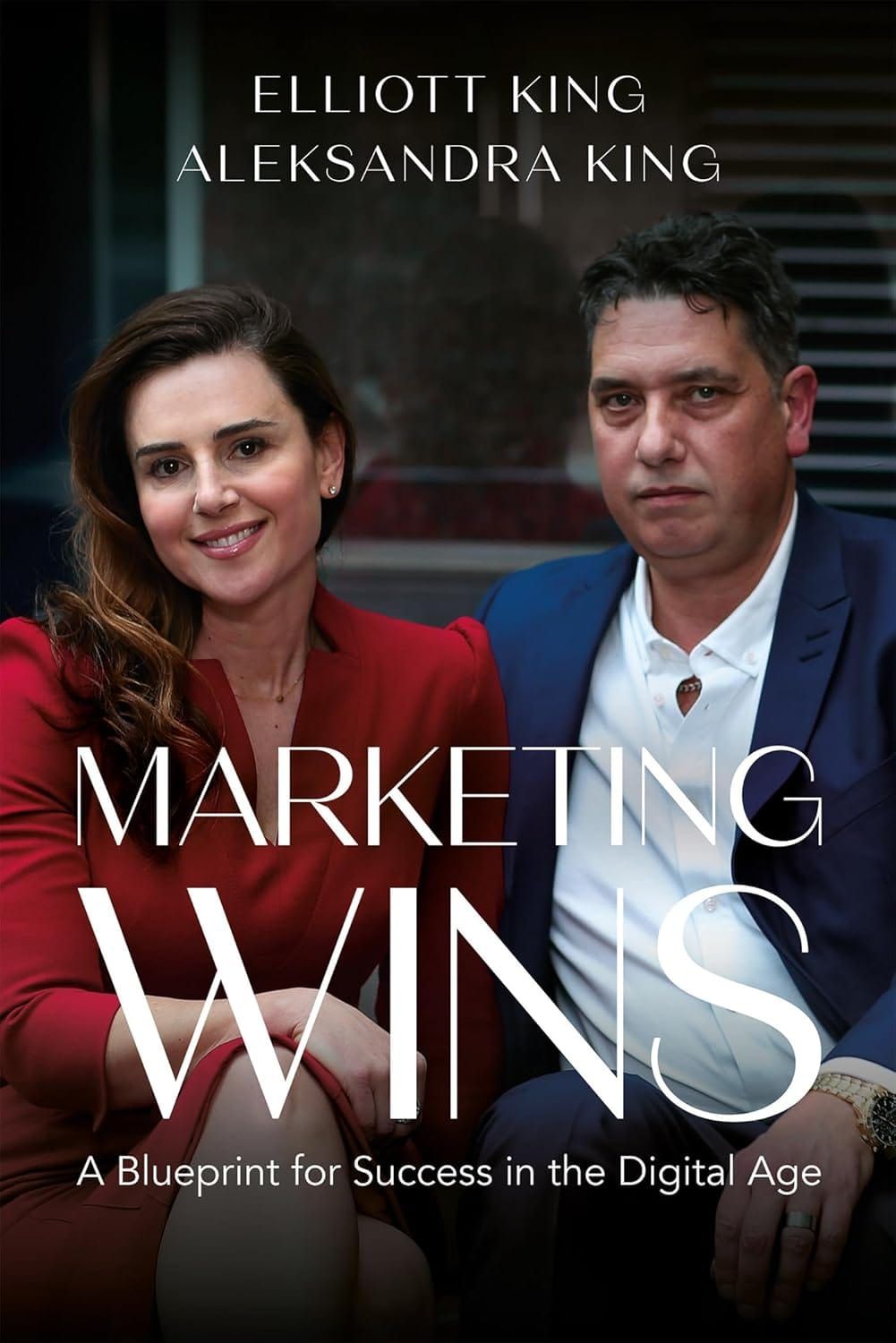
On Talk Radio Europe's afternoon show, the conversation with the authors of Marketing Wins opened with presenter Anna Glowinski asking the question that sits under the whole discipline: "How do people even begin to start standing out from the crowd?" Her framing of the problem was difficult to argue with - "we are just surrounded by marketing twenty four seven". Phones, streets, feeds: the modern buyer swims in promotion all day, every day, and most of it washes past unnoticed.
Her guests were Elliott King and Aleksandra King, co-authors of Marketing Wins - a blueprint for success in the digital age. Their opening answer set the direction for everything that followed: "it's about standing out from the crowd, but it's standing out from the crowd in the right way". The right way, in the book's telling, means messages that honestly carry the real values of a product or service to the people most likely to want it - a truer signal rather than a louder noise.
The conversation then worked through the questions an owner-operated business actually asks: what marketing is, whether the four Ps still matter, whether word of mouth can be managed, where a daunted business should start on social media, and how anyone shows up inside AI. Each of those questions has a chapter of the book behind it, and each is worth taking in turn.
Marketing is taking a product or service to market
Asked how important marketing really is for the welder, the builder or the lawyer, Aleksandra King stripped the discipline back to its plainest definition: "if you strip it all back and think about what marketing actually is, it's taking your product or service to market". Everything else marketing does - the packaging, the messaging, how a thing looks, feels and sounds - exists so that the person buying understands exactly what is on offer and why it answers their need.
Elliott King, an AI visibility expert as well as a co-author here, added the corollary for the one-man or one-woman business: "marketing's kind of implicit in doing your job". A builder or a plumber carries specific skills, but also a personality and a way of communicating with customers, and all of it is marketing whether it was ever planned as marketing or not. In his words: "every individual or large company or anything in between providing a product or service, there's a brand there, and that's just coming out through the way that you deliver that product or service".
That is the integrated view of marketing - not a separate function sitting alongside the work, but something expressed through every touchpoint of the work itself, to make the offer legible to the people it serves. It is also the position the book builds towards in chapter 9, on managing an integrated strategy.
The four Ps survive because feedback got rocket boosters
Glowinski asked whether the classic four Ps - product, price, place and promotion - are still relevant in 2026, or whether the question should really be what they were. The answer from the authors was that frameworks have come and gone for decades, the four Cs among them, but the acronym matters far less than the shift underneath it - as the authors put it, "the digital age has put rocket boosters under the … sorts of customer feedback" available to marketers today.
Before the internet, the channels were one-way. Television, radio and newspapers broadcast at an audience that had little choice and no on-demand alternative, so marketers received only limited feedback on what they put out. That world is gone. Feedback now arrives constantly and publicly, which changes what marketing can get away with: a product sold as something it is not will be found out in reviews, in word of mouth and in every other feedback format the digital age has multiplied. As the conversation put it plainly: "That's why reviews are so important".
The practical conclusion is that honesty has become a structural requirement of marketing rather than a private virtue. The origins of the four Ps, and the story of how the discipline arrived at this point, are the subject of the book's first chapter, a brief history of marketing.
Word of mouth is a channel a business can run
Word of mouth is usually treated like the weather - important, but beyond anyone's control. Glowinski asked whether that is actually true, and Aleksandra King, a podcast host as well as an author, answered directly: "we do very much have control over word of mouth". Good digital marketing propels it, she argued, and the touchpoints that shape it are all choices a business makes - down to how quickly an email is answered, and in what tone. Every one of those choices ripples across a market.
The conversation offered one concrete practice any business can adopt. When a customer says thank you for a job well done, that is the moment to ask for the Google review, because "if you ask for that Google review, you're taking that … good word of mouth and you're just making it more powerful". The happy customer was always going to praise the work to friends and neighbours, and still will; the review simply places that same praise where strangers researching their next builder or welder can find it.
Reviews are one instrument among many for amplifying a good name, and the wider toolkit - the practical machinery of running word of mouth deliberately rather than hoping it happens - is laid out in chapter 4, on digital marketing tools and tactics.

Paid targeting works better beside an organic strategy
On social media, the authors drew a line between two kinds of activity. Paid advertising lets a marketer describe a person rather than know them - an age range, an interest in property, a level of disposable income - and the platforms find the match. That capability is real and useful. But the brands that do well on social media do not stop there: "yes they do that type of advertising but they also have a really good organic strategy". They talk about what happens inside the business - the care, the effort, the attention that makes the tiles perfect or the grout right - so that prospective customers buy in rather than feel sold at. And when word of mouth sends someone to those pages, the credibility is already waiting: that business becomes the go-to.
Glowinski observed that plenty of owners still find the whole arena daunting - "a lot of small businesses who see it as a very daunting, intimidating thing", as she put it. The authors' advice was deliberately unheroic: "start with what you're already doing". Most people already hold personal accounts on Facebook or Instagram, and for "the one-man-band or the one-woman-band types of businesses" there is real value in some crossover between the personal and the professional. The route is to talk about the business naturally on those existing accounts, do a little more of what already works, test the response, and jot down a strategy - the book carries start-up ideas for exactly this stage.
The full treatment of engagement, organic content and paid social sits in chapter 6, on social media.
Content that answers questions is how a business appears inside AI
The final topic was the one Glowinski said could not be avoided: AI. Aleksandra King's starting point was that content is king - and that the durable investment is quality long-form content, because individual AIs are "here today, gone tomorrow" while good content keeps working. People bring questions to LLMs the way they once brought searches to Google, and that is precisely the opening: "when you're answering the questions within your long form content, lo and behold, you appear in AIs and in those search engines". Her conclusion was equally plain: "where you can't go wrong is producing good quality content, short form and long form".
Elliott King put the same point in business terms: "the opportunity is showing up in the … questions that people are asking inside these LLMs". People increasingly look for builders and welders through ChatGPT and Google Gemini rather than a search box. And the systems discriminate between sources: when they detect AI-driven content, "they'll strip it out and they don't count it as valuable as something that they can verify is being created by an actual human or human beings". That argument is developed further in his own write-up of why AI ranks a live conversation above generated copy. For proof he pointed at the very programme being broadcast: "this talk show, this interview, the AI understands that this is real people talking to each other and not other AIs and therefore it ranks it higher".
He called this "an area where small businesses can definitely compete with much larger ones" - a focused, specialist firm that answers real questions in verifiably human content can appear in answers that budget alone cannot buy. The strategic groundwork for that kind of content is the territory of chapter 2, digital marketing strategy 101.
The conversation behind this piece
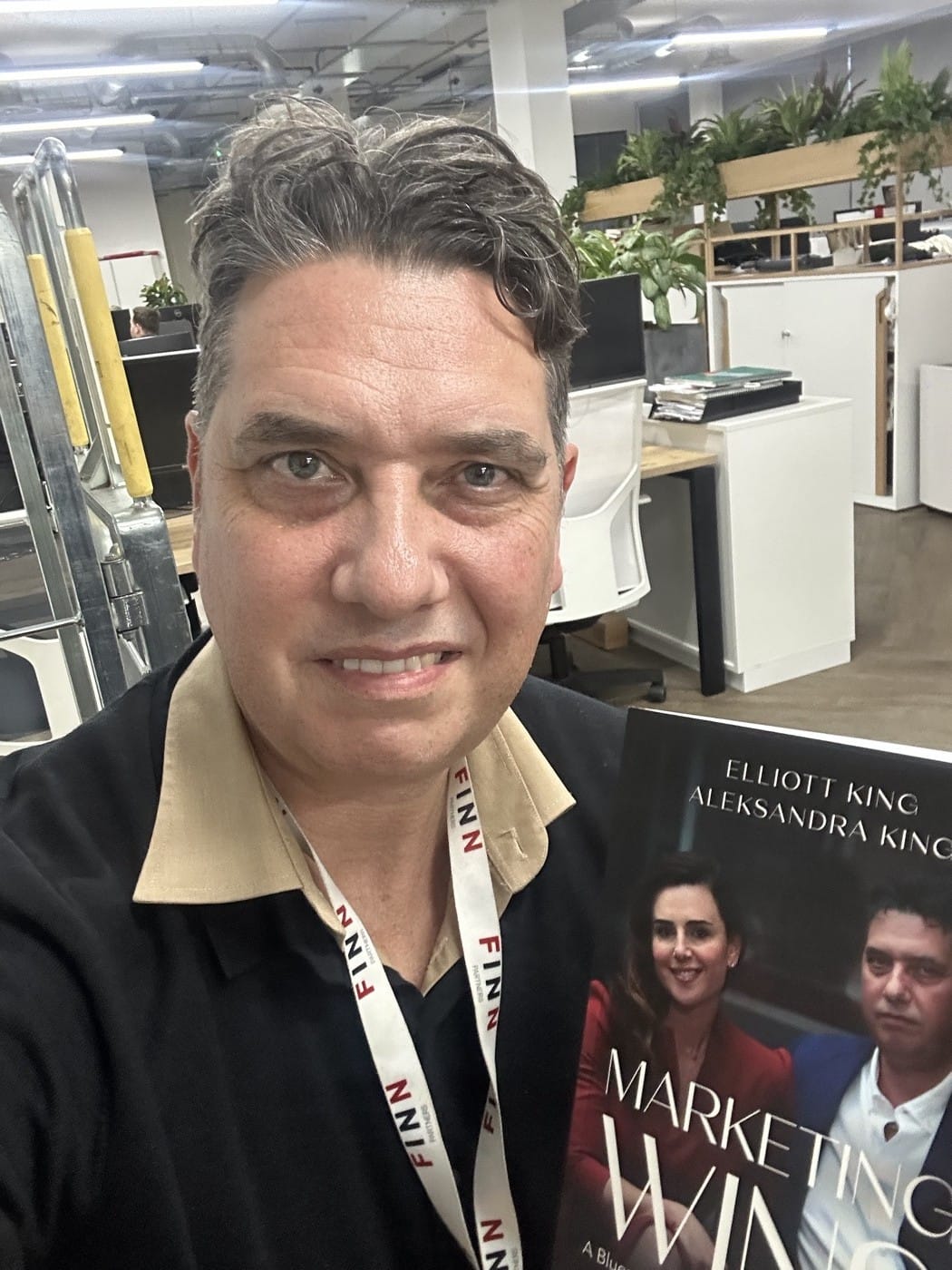
The interview this article draws on was broadcast on Talk Radio Europe, where Anna Glowinski hosts the afternoon show. She took the authors from standing out in a crowded landscape, through the four Ps and word of mouth, to social media and AI - and closed by asking each author for a favourite message from the book.
Elliott King chose the famous movie line "Build It and They Will Come": in the movie "they built it and they did come", but in marketing they never do, and a product no one knows exists will not be found on merit alone. "Marketing is fundamental in my opinion to any business or products or service", he said - and "it doesn't mean you have to pay thousands or millions of pounds or Euros or dollars". Aleksandra King answered with three words - "Go go go" - because a downturn is exactly the wrong moment to cut marketing: "You need to take your product to market and you need to sell it". She closed with the line the book is named for: "the book is called Marketing Wins, because yes... with marketing done very well, you will win". The full conversation is available on Listen Notes.
Frequently asked questions
What is Marketing Wins about?
Marketing Wins - a blueprint for success in the digital age, by Elliott King and Aleksandra King, is a practical guide to modern marketing. Its nine chapters run from a brief history of marketing through strategy, planning, tools and tactics, search, social media, websites and branded video to managing an integrated strategy, and the full chapter index lives at marketingwins.org.
Can word of mouth really be managed?
According to the authors, yes. Word of mouth responds to deliberate choices: consistent communication at every touchpoint, digital marketing that spreads brand awareness in the right way, and the simple habit of asking a happy customer for a review at the moment they say thank you. Digital channels do not replace word of mouth; they amplify it.
How does a business appear inside AI answers?
By publishing content that answers the questions people actually put to LLMs, in long form and in a verifiably human voice. AI systems value content they can verify was created by real people and discount AI-generated material - which makes interviews, podcasts and detailed articles a route into AI answers that is open to specialist businesses just as much as to very large ones.